


functionComputational complexity:QRstep

% Input: - the main diagonal of the symmetric tridiagonal matrix % - the subdiagonal of the symmetric tridiagonal matrix % - the shift used in the current step % - the order of the matrix % Output: - the new main diagonal of the symmetric tridiagonal matrix % - the new subdiagonal of the symmetric tridiagonal matrix % - the vector of the cosines coefficients of the Givens rotations % - the vector of the sines coefficients of the Givens rotations
% one step of implicitly shifted QR algorithm;


for


=Givens

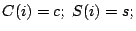
if

end


end


 floating point operations plus
 floating point operations due to the computation of the Givens coefficients by the function
Givens [8].


